
Last time, we looked at the third phase of effective Gut Rehab:
The ‘REPAIR’ Phase
This highlighted the importance of calming inflammation and helping restore the integrity of the gut lining.
Today we move to the fourth phase in the framework I use when addressing Small Intestinal Bacterial Overgrowth (SIBO):
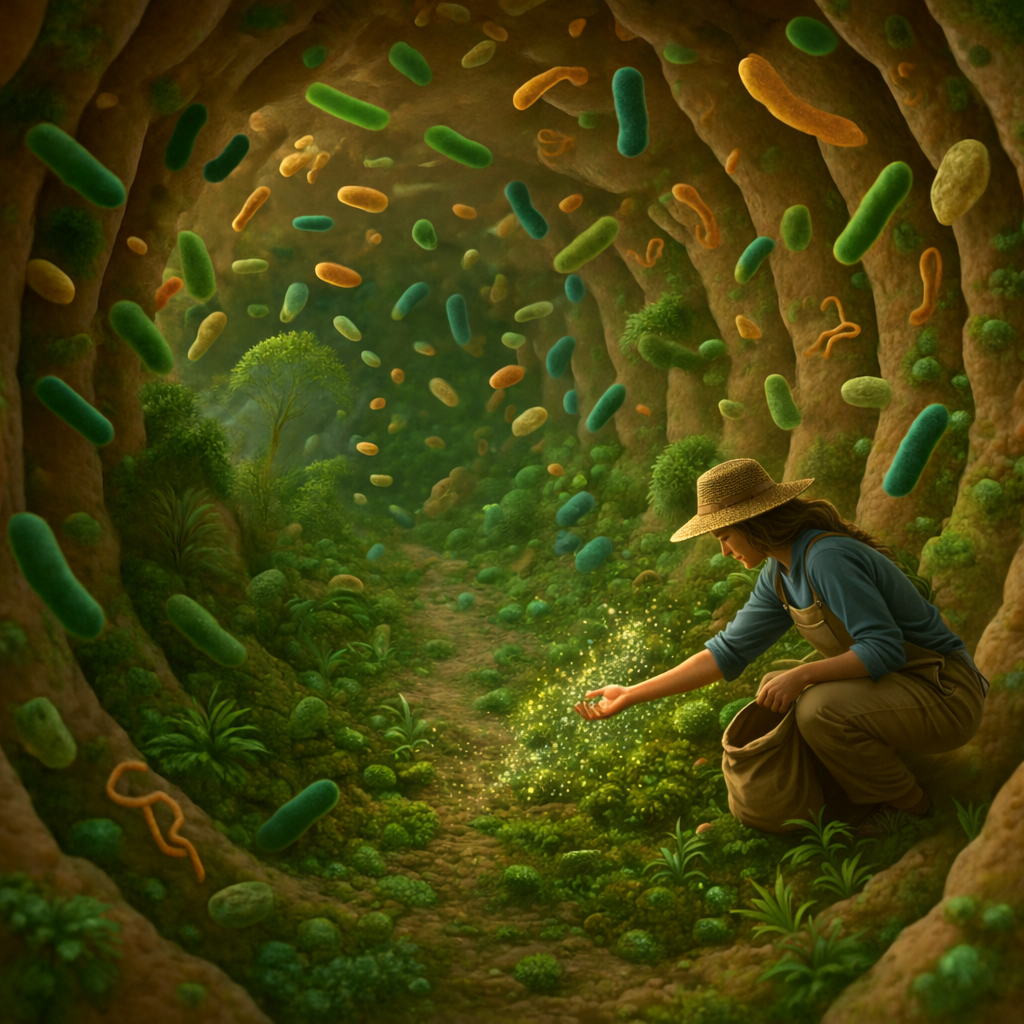
The ‘REINOCULATE’ Phase
And interestingly…
This is probably the phase most people jump to straight away...
So...you’d think it would also be the best understood phase....
I’m not completely convinced it is!
At least not from what I’ve seen.
Because the moment people hear words like gut health, microbiome, probiotics or prebiotics…
the instinct is often:
“Ok, so, I just need to add the good bacteria back in, right?!”
Sounds logical enough.
But a highly sensitive SIBO gut doesn’t always agree with said logic!
In fact, some of the very things marketed as being “good for the gut” can make symptoms significantly worse if they are introduced too early.
Take inulin, for example.
Inulin is a prebiotic fibre found in many generic gut health supplements.
On paper, it sounds great.
Feed the beneficial bacteria.
Support microbial diversity.
Improve gut health.
Lovely job!
But in someone with a reactive SIBO gut…
it can cause significant bloating, increased gas, more distension, and a definite worsening of symptoms.
Not because inulin is inherently a “bad” choice,
but because of the sensitive environment it is being introduced into.
In the right gut, inulin can be a useful tool.
But in a SIBO gut, it can be a bit like pouring petrol on a smouldering fire.
“But why, Ben, why?”
Because inulin is a fructan-based prebiotic that is poorly absorbed and often rapidly fermented.
Fructans fall within the FODMAP category of carbohydrates,
which are often problematic for people with SIBO.
At this stage, the gut is often still low in beneficial bacteria balance and resilience, so any prebiotics or probiotics need to be chosen carefully and strategically.
Which is exactly why this phase matters so much.
Because REINOCULATE is not about randomly throwing in prebiotics and probiotics and hoping for the best.
It’s about carefully rebuilding the right crowd…
Why REINOCULATE Matters:
Lets take stock of where we are in the gut rehab journey...
We have worked through the REMOVE phase, where we aimed to reduce the bacterial burden, calm the chaos, and identify which foods were clearly aggravating symptoms.
Then came the REPLACE phase, where we focused on restoring the missing pieces of healthy digestion. Things like:
Stomach acid
Bile flow
Digestive enzymes
Motility support
Then, in the REPAIR phase, we turned our attention to the gut lining itself, to provide the support it needed to start calming inflammation and restoring barrier integrity...
Now…
We are READY to REINOCULATE!
We Start with Diet:
Food is the most natural and often the most sustainable way to begin shaping the microbiome.
This usually means introducing fibre gradually and intelligently.
That may include a combination of:
Soluble fibre – which can help feed beneficial bacteria and support stool consistency
Insoluble fibre – which can help with bulk and bowel regularity, where tolerated
The key phrase here is:
START GENTLY!
In a SIBO-prone gut, even beneficial fibres can be too much, too soon.
So rather than jumping in with large salads, fibre powders, or huge portions of legumes…
we often begin with smaller, more tolerable amounts and build from there.
The goal is to build tolerance.
Recent reviews of nutritional therapy in SIBO support the idea that diet can help symptom control, but emphasize that responses are highly individual and aggressive fibre loading is not appropriate in symptomatic patients.
Then We Think About Prebiotics:
Once the gut is ready, targeted prebiotics can be really useful.
However, there is nuance to this...
Some, like inulin, can be far too fermentable for a reactive SIBO gut and may worsen bloating, gas and distension.
Others tend to be better tolerated.
Two examples often discussed in SIBO-friendly approaches are:
PHGG (Partially Hydrolysed Guar Gum)
A water soluble fibre that supports beneficial bacteria such as Lactobacilli and Bifidobacteria, while being better tolerated than other prebiotic fibres. Its shown to improve motility which in turn reduces the likelihood SIBO returning.
GOS (Galacto-oligosaccharides)
GOS can be a useful prebiotic option in some SIBO cases because forms such as beta-GOS are low FODMAP, and have been shown to support beneficial bacteria such as Bifidobacterium and Lactobacillus
In the right cases and in the right dosages, these can be really useful tools to REINOCULATING the beneficial bacteria and therefore reducing the likelihood of recurring SIBO.
Targeted Probiotic Support:
This is the part people tend to jump to first and again, its a area that has a lot of nuance to it.
The aim when I recommend a probiotic is to think:
Which specific organisms might be helpful in this person’s case?
Here's what we know about some strains and organisms and their benefits to SIBO:
Lactobacillus reuteri DSM 17938
L. reuteri DSM 17938 is an interesting one for methane-dominant cases because it has been shown to significantly reduce methane production, and in one study more than half of patients saw methane disappear altogether on repeat testing.
Saccharomyces boulardii
S. boulardii has shown promise in SIBO, with one placebo-controlled trial reporting markedly higher eradication rates alongside reductions in inflammation and bacterial translocation markers.
Bacillus clausii
A spore-forming organism that has shown promise in SIBO research, including improvement in breath test normalization in earlier studies.
Lactobacillus plantarum
L. plantarum is often discussed for its potential to reduce gas and support symptom improvement in functional gut conditions, and combinations including L. acidophilus are often used where bloating and discomfort are prominent.
The Takeaway:
So why does REINOCULATE matter?
Because at this stage, we are no longer just trying to suppress symptoms.
We are trying to rebuild the gut microbiome to help it become a healthier, more resilient ecosystem.
We have:
Removed what was aggravating the system.
Replaced what was missing for digestion to work properly.
Repaired some of the damage left behind.
And now…
We begin the careful process of feeding, guiding, and rebuilding the beneficial side of the gut ecosystem.
It is about doing the right thing, in the right order, at the right time.
Next Time: REBALANCE
Because once we have REMOVED the triggers…
REPLACED what was missing…
REPAIRED the terrain…
and started to REINOCULATED the ecosystem…
The final step is learning how to maintain that progress.
So your gut doesn’t just get better…