
Weight-Loss Jabs: The Good, the Bad and the Unknown
(This is a long one, so take your time with it)
If you read my last email and you’re someone who has tried...
and struggled....
to lose weight, you cannot be blamed for being curious about my next subject:
GLP-1-mimicking weight-loss jabs.
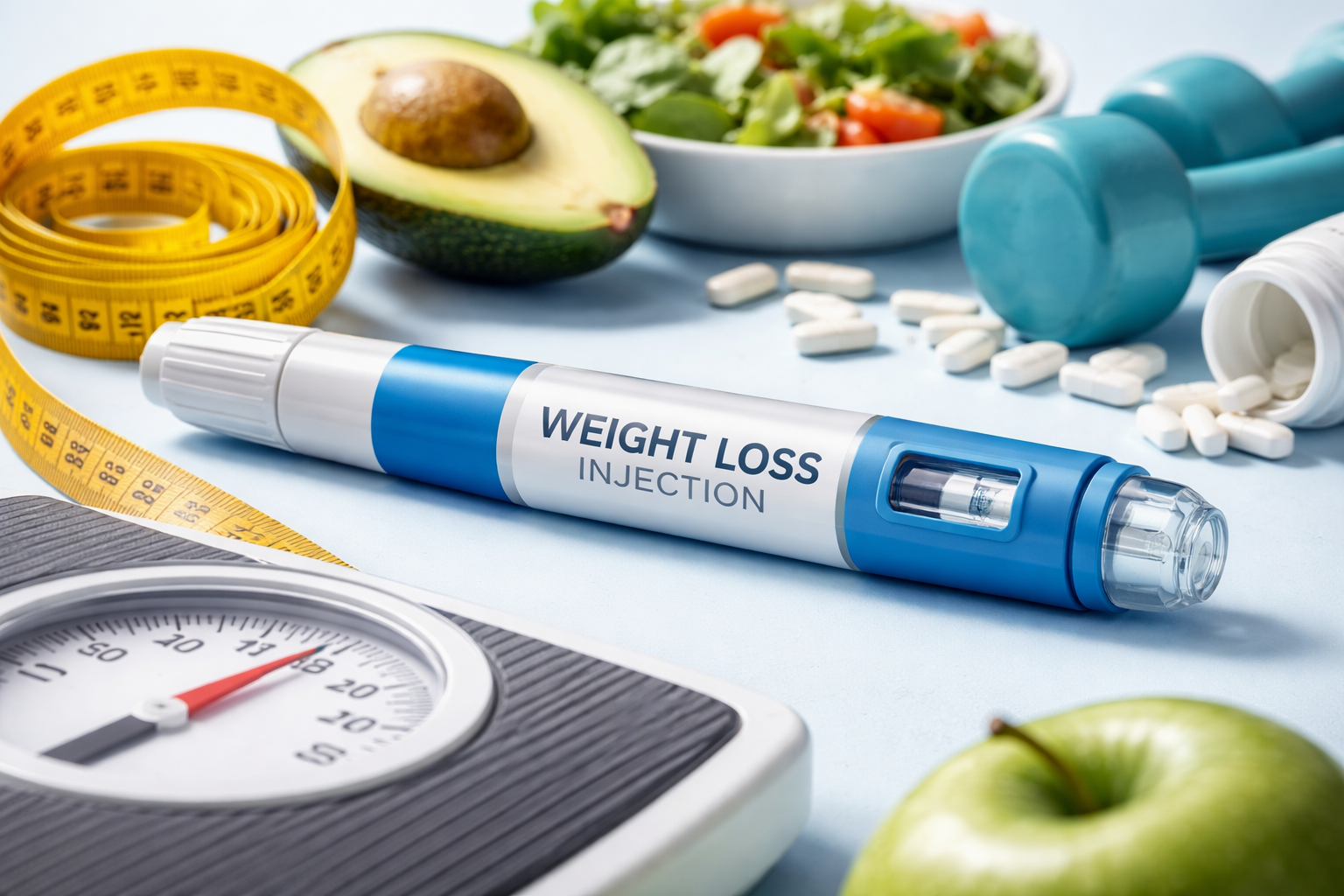
When your biology is stacked against you...
Your hunger signals...hormones....metabolism....are all pushing in the wrong direction, something that finally tips the scales back in your favour can feel like the answer you’ve been waiting for.
So let’s look at them properly...
GLP-1: Your appetite dimmer switch:
Imagine your appetite isn’t an on/off switch...but one of those glitchy dimmer switches....like the one that controls the lights in your living room...
When everything is working properly:
After you eat, GLP-1 is released from your gut and turns the dimmer switch down...reducing your appetite.
How do GLP-1 injections actually work?
GLP-1 injections like, Wegovy, Ozempic or Mounjaro mimic signals your body produces after a meal.
"Lets get specific..."
They work by:
Appetite suppression: They act on brain hunger centres to reduce appetite and cravings.
Slowing gastric emptying: Food stays in your stomach longer, which helps you feel full for longer.
Causing insulin and glucagon changes: They appear to stimulate insulin production (more on this later...) and reduce glucagon (a hormone that raises blood glucose), smoothing out blood sugars and reducing hunger signals.
In short: They help shift your body from a “store energy” mode toward a “eat less and burn fat” mode.
The Good: They work
There’s robust evidence that these drugs achieve significant weight reduction when they’re taken:
• In this large clinical trial, participants taking weekly semaglutide (Ozempic) lost 15% of their body weight, roughly 15 kg, on average over 68 weeks, which was 5–6 times more than lifestyle intervention alone.
And they are improving...
• In a head-to-head clinical study between Ozempic and Mounjaro (tirzepatide), Mounjaro led to an average weight loss of just over 20% of body weight, compared with around 14% with Ozempic over 72 weeks ,making it the most effective weight-loss drug studied to date.
• Beyond weight loss, this study showed Ozempic reduced the risk of heart attack, stroke, or cardiovascular death in people with obesity and established heart disease by around 20% over nearly 4 years.
"What does this all mean though, Ben..."
This means, these medications genuinely work...they’re not placebo effects or chance changes. Many people see measurable weight loss alongside reduced hunger and improvements in metabolic markers.
CHEEKY NB: I feel compelled to mention however...just for transparency...that all the studies I have referenced above were funded by the manufactures of either Ozempic or Mounjaro.
Make of that, what you will...
The Bad: Side effects and developing concerns
However...
and this is a big however, they are medications, and like all medications, there are trade offs:
Common side effects:
These are the minor ones, but can be experienced more frequently -
Gastrointestinal issues: nausea, diarrhoea, constipation, vomiting (All of these are 'very common' or 'common')
Injection-site reactions and headaches.
Muscle loss impact:
A recent review found that while GLP1 agonists are very effective at reducing body weight, some of that loss can come from lean tissue, including muscle.
The takeaway is that GLP-1 drugs don't automatically cause harm, but that weight loss without adequate protein and resistance training to preserve muscle, may carry hidden costs that don’t show up on the scales.
Pancreatitis risk:
Regulators are now investigating reports of acute pancreatitis (inflammation of the pancreas) in people taking GLP-1 medications.
It’s really important to note that large clinical trials so far have NOT definitively shown that GLP-1 drugs increase pancreatitis risk compared with placebo, but a small signal can’t yet be fully ruled out and therefore this is under study.
Fat rebound after stopping:
This one is hot off the press (at the time of writing)
Its really clear from the latest research that once you stop using the injections, most of the weight loss and metabolic benefits tend to reverse often faster than lifestyle-only weight loss regimens typically within 18–24 months:
People regained weight at a rate of 0.4 kg per month after stopping.
Metabolic markers like cholesterol and blood pressure also trend back toward pre-treatment levels once medication ceases.
This suggests to me that, for most people, GLP-1 drugs are NOT a permanent solution, but a temporary support. Something that creates space to build sustainable habits, while reminding you that your body CAN respond.
The Unknown: "What we don't know, might hurt us"
Despite their widespread use, there are still important unknowns.
Most trials only follow people for 1–3 years, so long-term safety beyond 5+ years remains unclear.
This includes potential effects on the pancreas, thyroid, cancer risk, and the nervous system.
There are also early signals around women’s health, muscle and pelvic function that haven’t yet been properly studied.
And crucially, we still can’t predict who will maintain weight loss after stopping treatment and who won’t.
In short: The long game is still uncharted territory.
"So, what’s the bottom line, Ben?"
I would say, yes, GLP-1 weight-loss jabs work well short-term and often outperform traditional dieting alone in terms of speed and sheer weight reduction. They can also improve cardiovascular markers and metabolic health.
But...
They are not risk-free, and most importantly, their benefits may not stick once treatment stops unless the underlying lifestyle, behavioural, and metabolic patterns that maintain weight are addressed.
The BIG question:
With all the risks and reversals, does the benefit outweigh the concern?
The science suggests time will tell, and ongoing, holistic care will likely remain essential regardless of medication use.