
Does snacking make us fat?
Today there is an article on the BBC website suggesting that snacking should be banned on public transport in order to address the obesity crisis in this country. (1)
This suggestion has come from one of the chief Doctors in charge of public health in the country who, you would assume, can see the figures for obesity rising along with the costs of trying to manage the issue but is this the way to stop obesity and how could you possibly police it?
Let’s look at what a recent study says about snacking:
Snack Food, Satiety, and Weight (2016) suggests that the data is (predictably) very mixed as to whether eating snacks will increase your risk of obesity as (again predictably) it very much depends on the snack and the overall lifestyle of the person / family. (2)
The study suggests that snacks that are higher in fibre, protein and whole foods actually enhance satiety (feeling of fullness) when consumed and may actually delay the need for the next meal, whereas snacks higher in processed carbohydrates can increase the need to eat sooner after their consumption. (2)
My thoughts –
Calories v Blood sugar
This study indicates that children gain 27% of their daily caloric intake from snacks, however Nutrition is more than just calories. Carbohydrates, fats and proteins all have differing effects on your blood sugar levels and, as the study suggests, will affect your ‘feelings of hunger’ in very different ways.
Snacking on nuts, olives, vegetables, animal protein will not push your blood sugar levels up as high as having bread, potato snacks, rice snacks or sweet snacks will and therefore will address your ‘ ‘feelings of fullness’ for longer whilst maintaining your blood sugar levels.
Children and Snacking
My observation is that children will largely copy what their parents do and that will include, eating what they eat and moving as they move. (This observation is also reflected in the research) So it starts with the parents, let’s get them active and eating REAL food and that will reflect down to their children, who are the masters of imitation.(3)
Children’s brains are growing and learning more and more every day and therefore they require a really varied, nutritious diet, full of a good balance in carbohydrates, proteins and fats, not chicken nuggets and chips. Snacks can complement a child’s diet really well particularly if they are learning and active at school because they will need the calories but those snacks need to be balanced with fat and protein, not just blood sugar spiking carbohydrates.
This is a great snack or breakfast idea for kids to have in their lunch boxes which contains a great balance of nutrients –
Egg Mac Muffin’s -
Serves 2-3
Ingredients – All organic if possible:
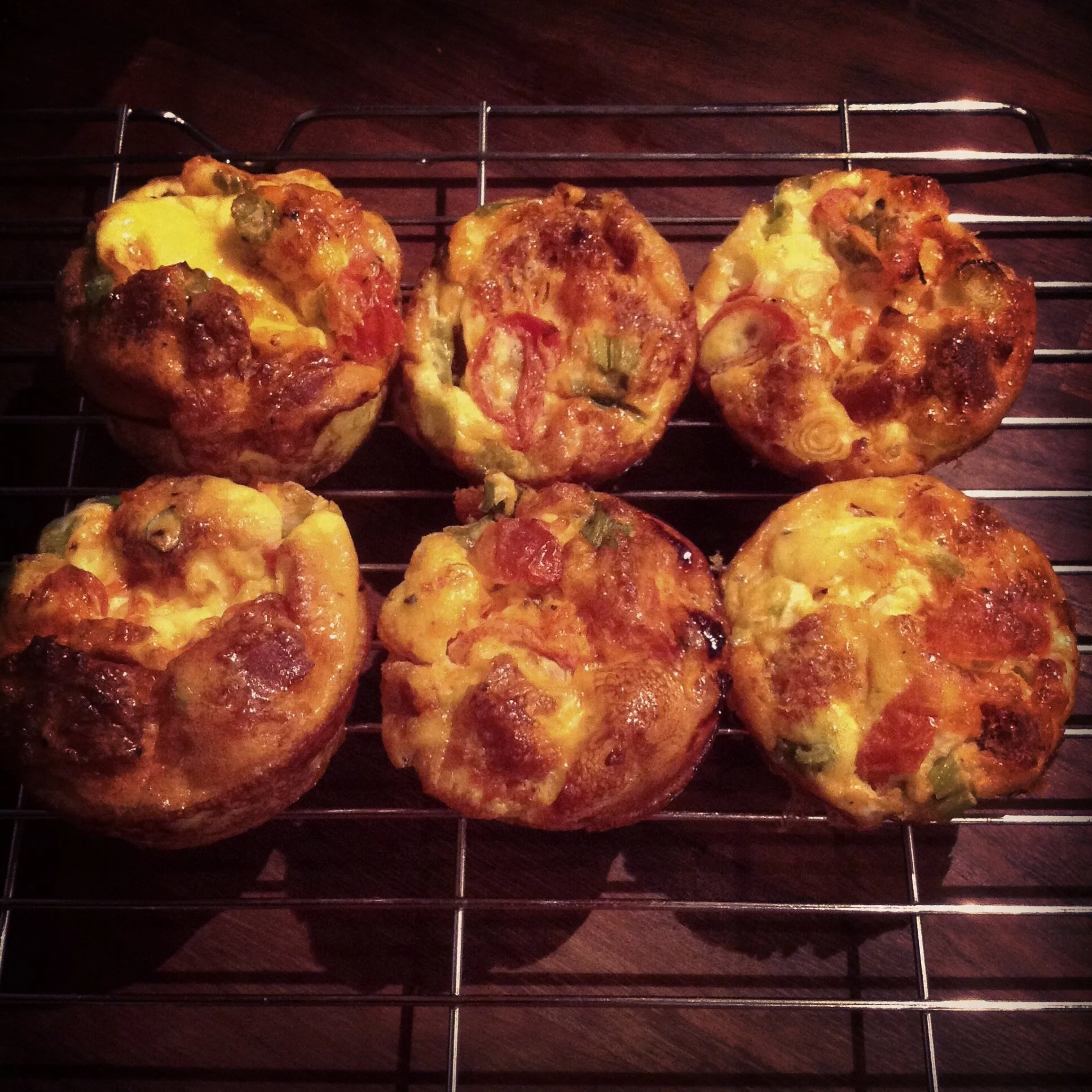
2x Spring onions chopped
100g Raw cheese cubed
50g Pancetta / Bacon
1-2 Vine tomatoes cubed
25g of Fresh spinach
25g Red/green peppers
6 Free range Eggs, beaten. (If you like you can add a bit of raw milk or coconut milk)
Himalayan Sea salt and pepper to taste
You can try using chicken, beef, mince, sausage, ricotta and more. Whatever takes your fancy.
Method:
1. Preheat the oven to 180/200c
2. Grease your muffin tin with Butter or coconut oil.
3. If you are using meat, gently fry it off in a frying pan in little bit of coconut oil or until cooked through.
4. Add the veg/ meat and cheese to the muffin tins. Mix and match as much as you like.
5. Pour the beaten eggs into each muffin tin, ensuring the contents are covered.
6. Place the muffin pan into the oven and bake for 20 – 25 mins or until the muffins are light brown, puffy and the eggs are set.
7. Let the muffins cool before eating immediately. Alternatively you can refrigerate them to eat cold during the week.
References:
BBC News. (2019). 'Ban snacking on public transport'. [online] Available at: https://www.bbc.co.uk/news/health-49975720 [Accessed 10 Oct. 2019].
Njike, V., Smith, T., Shuval, O., Shuval, K., Edshteyn, I., Kalantari, V. and Yaroch, A. (2016). Snack Food, Satiety, and Weight. Advances in Nutrition, 7(5), pp.866-878.
Savage, J., Fisher, J. and Birch, L. (2007). Parental Influence on Eating Behavior: Conception to Adolescence. The Journal of Law, Medicine & Ethics, 35(1), pp.22-34.